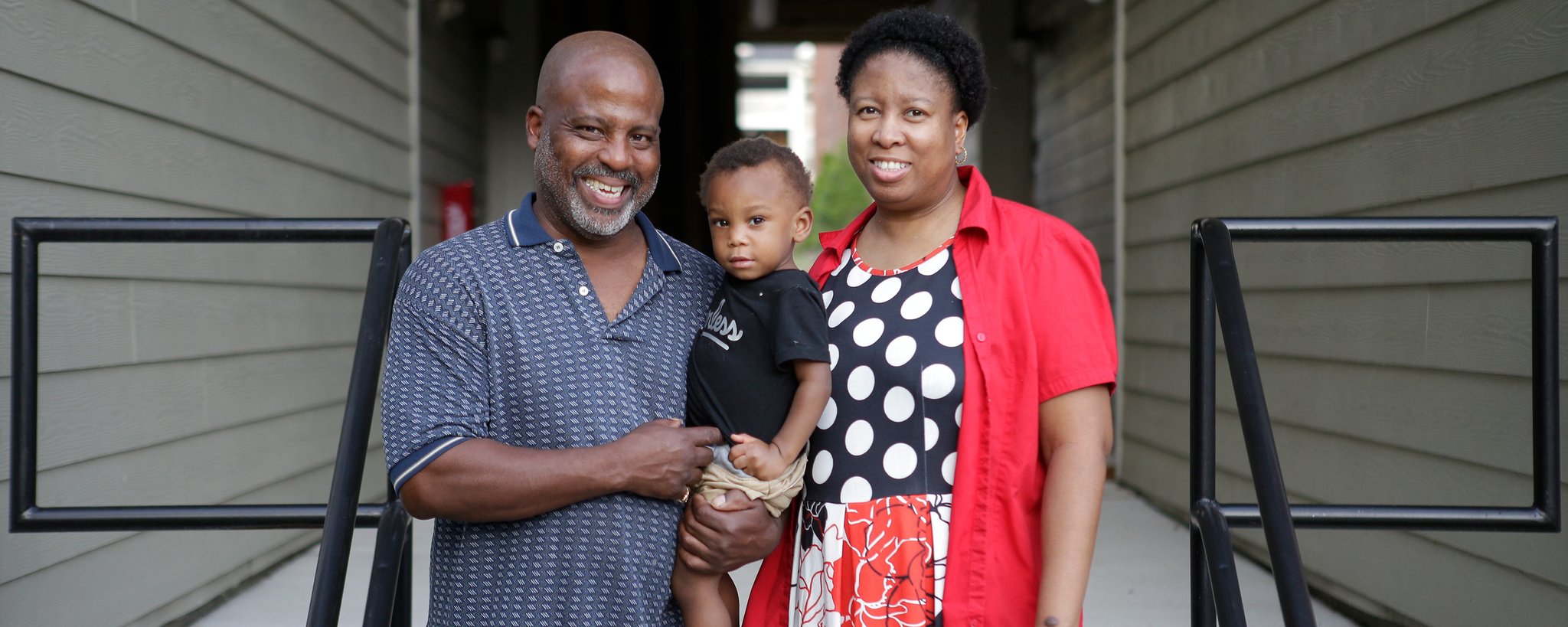
“To them it’s not about the sale, it’s about trying to help families move on. They treated me like I was their only client, and I had that one-on-one attention.”Read more about Charlisa Boyd
Charlisa Boyd
Sold to Opendoor in Raleigh, NC
Get an instant offer, choose your close date, skip repairs.
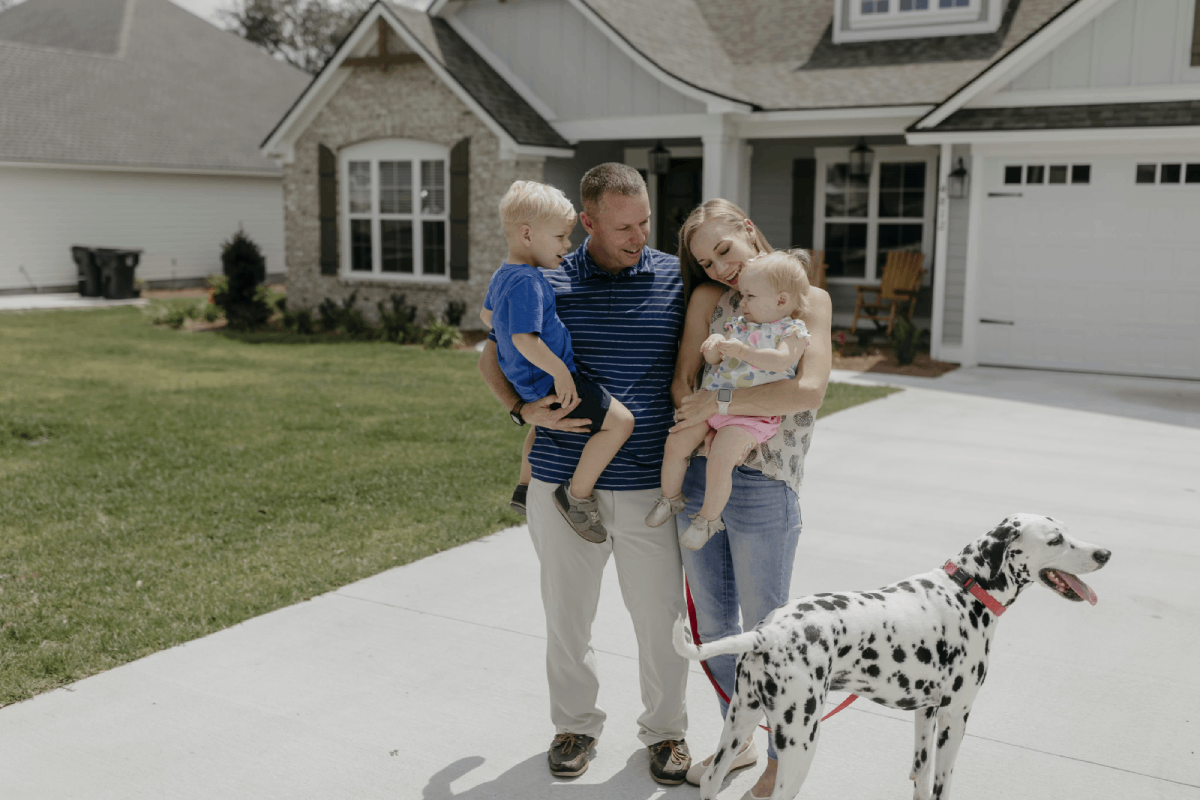
Skip the work with a cash offer from Opendoor.
Cash Now, More Later
Cash
“To them it’s not about the sale, it’s about trying to help families move on. They treated me like I was their only client, and I had that one-on-one attention.”Read more about Charlisa Boyd
Charlisa Boyd
Sold to Opendoor in Raleigh, NC

“Opendoor’s offer came in right near our appraisal, but we never had to list the house or do showings. For the kind of value Opendoor gives you, it’s just a no-brainer.”Read more about Adam Leon
Adam Leon
Sold to Opendoor in Phoenix, AZ
Calculate your mortgage with our free calculator. Get an estimate of your monthly payments, interest, and amortization.
Mortgage CalculatorEstimate the cost of selling and the net proceeds you could earn from the sale in less than 30 seconds. No commitment.
Home Sale CalculatorGet a free estimate with our home value estimator, then come back to compare it against a no-obligation Opendoor offer.
Sellers typically pay 6.5-8.5% of the sale price total. Agent commissions run 5-6%. Additional costs include the NC excise stamp tax ($1.00 per $500, ~0.20%, seller-paid by statute), owner's title insurance (~0.5-0.7%), attorney closing fees ($600-$1,200), and county recording fees. On a $360,000 home, expect $2,500-$4,500 in non-commission closing costs.
With North Carolina's Q1 2026 statewide median at $360,000 and total seller costs around 7-8%, most sellers net approximately $331,000-$338,000 before mortgage payoff. Charlotte ($395,000) and Raleigh/Research Triangle ($430,000) sellers net more in absolute terms; Greensboro ($285,000) offers lower transaction costs but a smaller absolute gain. Use the home sale calculator to estimate your specific situation.
Cash buyers and iBuyers like Opendoor purchase homes across North Carolina - from Charlotte and Raleigh to Greensboro and Asheville - without repairs, showings, or financing contingencies. Get a firm offer and choose your close date.
Whether you need to sell in 21 days or 60, Opendoor gives you certainty on price and timeline - no agent commissions, no open houses, no last-minute buyer fallouts.
Ready to see what your North Carolina home is worth? Get a cash offer in 24 hours.
Opendoor's cash offer gives North Carolina sellers a straightforward alternative to the traditional listing process - no repairs required, no open houses, and no risk of a buyer's financing falling through.
No waiting, no contingencies, no surprises - just a predictable sale on your schedule.
North Carolina homes averaged 42 days on market in Q1 2026, but with active listings up 18% year-over-year, pricing and presentation matter more than at the 2021-2022 peak. Opendoor gives you a firm cash offer backed by local market data - including the Zillow Home Value Index - so you know exactly what you will net before you commit.
Skip the prep work entirely. No repairs, no staging, no contractor coordination before listing. Opendoor buys your North Carolina home as-is - whether it is a new build in a Raleigh suburb, a craftsman bungalow in Charlotte's NoDa neighborhood, or a mountain property near Asheville.
Close on your schedule. Choose any date from 21 to 60 days out. If you are relocating for Research Triangle Park, Bank of America, Duke Health, or Fort Liberty, a predictable close date removes the biggest variable from your move.
North Carolina market at a glance (Q1 2026): Median sale price $360,000 | YoY change: +4.6% | Days on market: 42 days | Active listings: ~33,800 | Months of supply: 3.5 months
North Carolina sits in a lightly seller-favorable market. At 3.5 months of supply, inventory has risen significantly from the 1-2 month extremes of 2021-2022 but remains below the 6-month neutral threshold. The Zillow Home Value Index puts the statewide average at $321,475, up 3.1% year-over-year, reflecting sustained demand anchored by strong in-migration. Charlotte and Raleigh rank among the top 5 fastest-growing US metros, while Asheville commands premium pricing as a sought-after mountain destination.
North Carolina's economy is driven by four sectors that fuel consistent housing demand. The Research Triangle Park near Raleigh-Durham is one of the largest research parks in the US, with IBM, Cisco, SAS Institute, and Biogen among its anchors. Apple, Google, and Amazon have added major campuses and data centers in the region, pushing high-income worker in-migration to record levels. Charlotte is the second-largest US banking center after New York, home to Bank of America's headquarters and one of Wells Fargo's largest workforces.
Advanced manufacturing is expanding rapidly: Toyota's $13.9 billion EV battery plant in Randolph County, Wolfspeed's semiconductor campus in Durham, and Caterpillar's operations bring well-paying manufacturing jobs to the state. Healthcare is anchored by Duke Health, UNC Health, and Atrium Health/Advocate, collectively employing over 300,000 statewide. Fort Liberty - the largest US Army post by population - and Camp Lejeune provide stable military housing demand in the eastern part of the state.
North Carolina's rising inventory means buyers have more choices than in recent years - homes sitting above market value attract less activity than in the frenetic 2021-2022 cycle. Spring (March through May) is historically the strongest selling window, with the highest volume and fastest absorption. Well-priced homes in Charlotte and Raleigh still generate multiple-offer situations; Greensboro and smaller markets have more negotiating room for buyers.
Location drives major price variation across the state. Raleigh/Research Triangle at $430,000 and Asheville at $480,000 sit well above the statewide median, while Greensboro at $285,000 offers significantly more affordability. If your timeline is fixed or you want to avoid the uncertainty of scheduling an attorney-supervised closing during a slow period, Opendoor's cash offer removes the wait.
Opendoor serves markets statewide across North Carolina. The cities below are our top markets - those with enough recent sales data to show local statistics and trends - but you can get a cash offer on your home anywhere in North Carolina.
Spring is the strongest window - March through May brings the highest buyer demand and fastest sales in North Carolina. Charlotte and Raleigh see the sharpest spring spikes due to corporate relocation cycles. Fall (September through October) is the second-best window. January and February are historically the slowest months. See our guide on the best time to sell a house.
North Carolina homes averaged 42 days on market in Q1 2026 (NC Realtors), plus 30-45 days to close once under contract. Total traditional timeline: 10-13 weeks. North Carolina requires a licensed attorney to supervise every closing, which can add scheduling time. A cash buyer closes in 21 days. Read more about how long it takes to sell a house.
Sellers typically pay 6.5-8.5% of the sale price total. This includes agent commission (~5-6%), the NC excise stamp tax (~0.20%, seller-paid by law), owner's title insurance (~0.5-0.7%), attorney closing fees ($600-$1,200), and county recording fees. On a $360,000 home, non-commission costs run $2,500-$4,500. See the full breakdown of how much it costs to sell a house.
North Carolina charges an excise stamp tax of $1.00 per $500 of sale price (0.20%) under NC General Statutes Section 105-228.30. The seller pays this tax by statute. On a $360,000 home, the excise tax equals $720. Some counties also charge an additional land transfer tax (up to 1%) - check your specific county before closing. Learn about other hidden fees when selling a house.
North Carolina requires sellers to complete a Residential Property and Owners' Association Disclosure Statement under Chapter 47E (Residential Property Disclosure Act). It covers structure/foundation/roof, plumbing/electrical/HVAC, water supply/sewage, wood-destroying organisms, environmental hazards (lead paint, underground storage tanks, radon), flood zone status, and HOA/owners' association obligations. It must be delivered before the buyer makes an offer or within 3 business days of contract execution. Read how to sell your house for more on seller obligations.
Yes. North Carolina is an attorney-state. A licensed NC attorney must conduct the title examination, prepare and review all closing documents and the deed, and supervise the closing for every residential real estate transaction. Title insurance must also be issued through a licensed NC attorney acting as title agent. Non-attorneys may not independently conduct real estate closings in North Carolina. See our guide on how to sell your house.
The fastest options are: (1) sell to a cash buyer like Opendoor and close in 21 days, (2) price at or slightly below current market value to generate immediate activity, or (3) list during peak spring season when buyer demand is highest. Traditional NC sales average 42 days on market plus 30-45 days for the attorney-supervised closing process. Read the complete guide to how to sell your house fast.
Yes. NC Chapter 47E requires disclosure of known defects, not repair. Sellers must disclose known material issues on the state disclosure form but are not legally required to fix them. Cash buyers and iBuyers purchase homes as-is with no repair requirements. Traditional buyers may still request concessions after inspection even for as-is listings. Learn more about how to sell your house.
A cash offer means the buyer does not need a mortgage - no lender approval, no appraisal contingency, no financing fall-through risk. Cash offers typically close in 21 days compared to 10-13 weeks for a traditional NC sale (including attorney-supervised closing). The trade-off is that cash offers are often below full list-price market value. Learn what to expect from a cash offer in real estate.
Listing with an agent may net more money but takes 10-13 weeks, requires completing the Chapter 47E disclosure, coordinating an attorney-supervised closing, managing showings, and negotiating contingencies. Opendoor offers a guaranteed price, no agent commission, no repairs, and a flexible close date you control. In NC's current market with 42-day average DOM, the time savings are significant. See the full comparison guide.
In North Carolina, the biggest drivers are proximity to major employment centers (Research Triangle and Charlotte command $70,000-$120,000 premiums over the statewide median), school district ratings, lot size, home condition, and access to amenities. Asheville's mountain setting and tourism economy push its median $120,000 above the statewide figure. Flood zone status matters in coastal and low-lying areas. Read about factors that influence home value.
North Carolina prices are up +4.6% year-over-year as of Q1 2026, with 3.5 months of supply - a lightly seller-favorable market. Charlotte and Raleigh remain among the top 5 fastest-growing US metros with strong underlying demand. Rising inventory means buyers have more leverage than in 2021-2022, but well-priced homes still move quickly. If certainty matters, Opendoor's cash offer removes market timing from the equation. Read more about the best time to sell a house.
Yes. North Carolina requires withholding of 4% of net proceeds for nonresident sellers under NC Gen. Stat. Section 105-163.3. The closing attorney must withhold and remit the amount to the NC Department of Revenue. Nonresident sellers must also file a North Carolina income tax return (Form D-400). Exceptions may apply if proceeds are below the applicable threshold or the property qualifies as a principal residence under IRC Section 121. Consult a tax advisor before closing. Learn about hidden fees when selling a house.